Michele Statz, PhD
Professional Interests
Access to justice in rural Tribal and state courts
Judicial health and healing
Accountable, rurally relevant research methods and Indigenous data Sovereignty
Health-harming civil legal needs
Human rights and global mobility
Legal ethics and professional responsibility
My Work
Since 2017, I have been conducting empirical research on access to justice across rural Tribal and state court jurisdictions. This research has been generously funded by the National Science Foundation’s Law & Science Program (award #1729117, #2215074), the American Bar Foundation, the JPB Foundation, and the University of Michigan’s Research for Indigenous Social Action and Equity (RISE) Center.
When I first started, my goal was to understand what it’s like to be a private or public interest attorney in diverse rural jurisdictions—and likewise what it means to have a civil legal problem in these areas. That research is profiled on this website.
What I didn’t expect to learn was the critical, often collaborative role that rural Tribal and state court judges play in providing access to justice to rural litigants. This is really important—but largely overlooked by scholars, funders, and decision-makers. To change this, I’m presently collaborating with fifteen Tribal and state courts to rigorously document judges’ “active judging” practices; how diverse rural litigants experience these efforts; and what they mean for policy and practice amid the growing access to justice crisis.
My research has been published in numerous peer-reviewed journals and featured in The Wall Street Journal, Law.com, Law360, The Daily Yonder, MinnPost, andWisconsin Examiner.
Judicial Wellness
Owing to what I’ve witnessed in my work with judges, I am deeply committed to addressing the complex emotional, mental, physiological, and spiritual aspects of judicial work. I am the Director of Judicial Wellbeing at Berkeley Judicial Institute, where I have designed and write our “Your Body on the Bench (Card)” series; regularly teach “Cultivating Healing and Health in the Judiciary”; and have developed innovative new programs like “Casework,” where judicial officers can collaboratively process the emotional, not just legal, dimensions of judging.
To inform this work, I am concurrently pursuing a Master’s of Divinity degree with a concentration in spiritual care.
Public and Policy Engagement
I’m lucky to work in very socially and geographically diverse rural spaces. As a result, I spend a lot of time writing and speaking about the need for more nuanced, dynamic, and empirically-informed “rural A2J” initiatives (inc. here). On the policy side of things, I share my research insights as a member of the Federal Rural Justice Taskforce and on the Frontline Justice Leadership Counsel. On the academic side, I am the co-founder and organizer of the Law and Rurality Collaborative Research Network. I also mentor and train the most amazing group of student research assistants, many of whom identify as first-gen, Indigenous, and/or rural, and all of whom are deeply committed to changing the narrative on rural / Indian Country A2J.
About Me
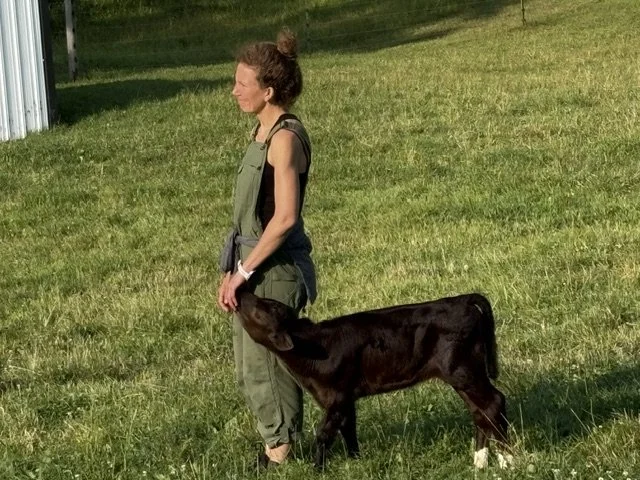
I’m a first-generation college graduate from rural Wisconsin. I’m happiest trail running and spending time with my partner and our beloved circus of kids and animals.
I am trained as an anthropologist of law, with a PhD in Sociocultural Anthropology and a Graduate Certificate in Comparative Law and Society Studies from the University of Washington. I am currently pursuing an MDiv with a focus on board-certified interfaith chaplaincy. I am also certified in Critical Incident Stress Management (individual and group) through the University of Maryland Department of Emergency Health Services and the International Critical Incident Stress Foundation.